

Extraordinary in the Ordinary: Alan’s Story
In August 2022, Alan was what he would describe as a typical 17-year-old — enjoying his summer, looking forward to his senior year of high school, and spending time with his friends.
As a capstone to summer vacation, Alan and his friends went to the beach. He had an amazing time, just walking along the coast, kicking up sand, and soaking up the last weeks of summer sunshine.
That night, he returned home, showered, and went to bed. But when he woke up the next morning, it was a completely different story. Gone was the sun-soaked, lazy feeling of a teenager at summer — instead, he felt sick. He couldn’t keep food down and had trouble focusing.
“I figured, oh no, I guess I caught a bug at the beach,” he said.
A Normal Summer Bug Becomes… Less Normal
But as the days progressed, this “bug” seemed to be getting worse, and his symptoms grew concerning: He kept forgetting things. He started feeling really tired, no matter what he was (or wasn’t) doing. He started bruising easily. He had sweats and chills.
“My body was going crazy,” he recalled. “I remember thinking, is this really what the flu is like?”
Once he developed a fever, however, his parents knew they had to figure out what was wrong. They drove him to the hospital, and the doctors began eliminating what it could be from a list of potential illnesses.
“They kept going down the list. COVID? No. Appendicitis? Nah. Pneumonia? Nope. Mono? Maybe…? They just weren’t sure,” Alan said.
Through all that back-and-forth — heading to the hospital, returning home, video-calling doctors — Alan figured that whatever it was would pass before they ever found answers to what it was.
But a little over ten days after the beach trip, the doctors found the answer: Leukemia.
“At the time, I didn’t know what Leukemia even meant,” he said. “I didn’t know what an oncologist was when I was referred to one. That night just feels like a blur.”
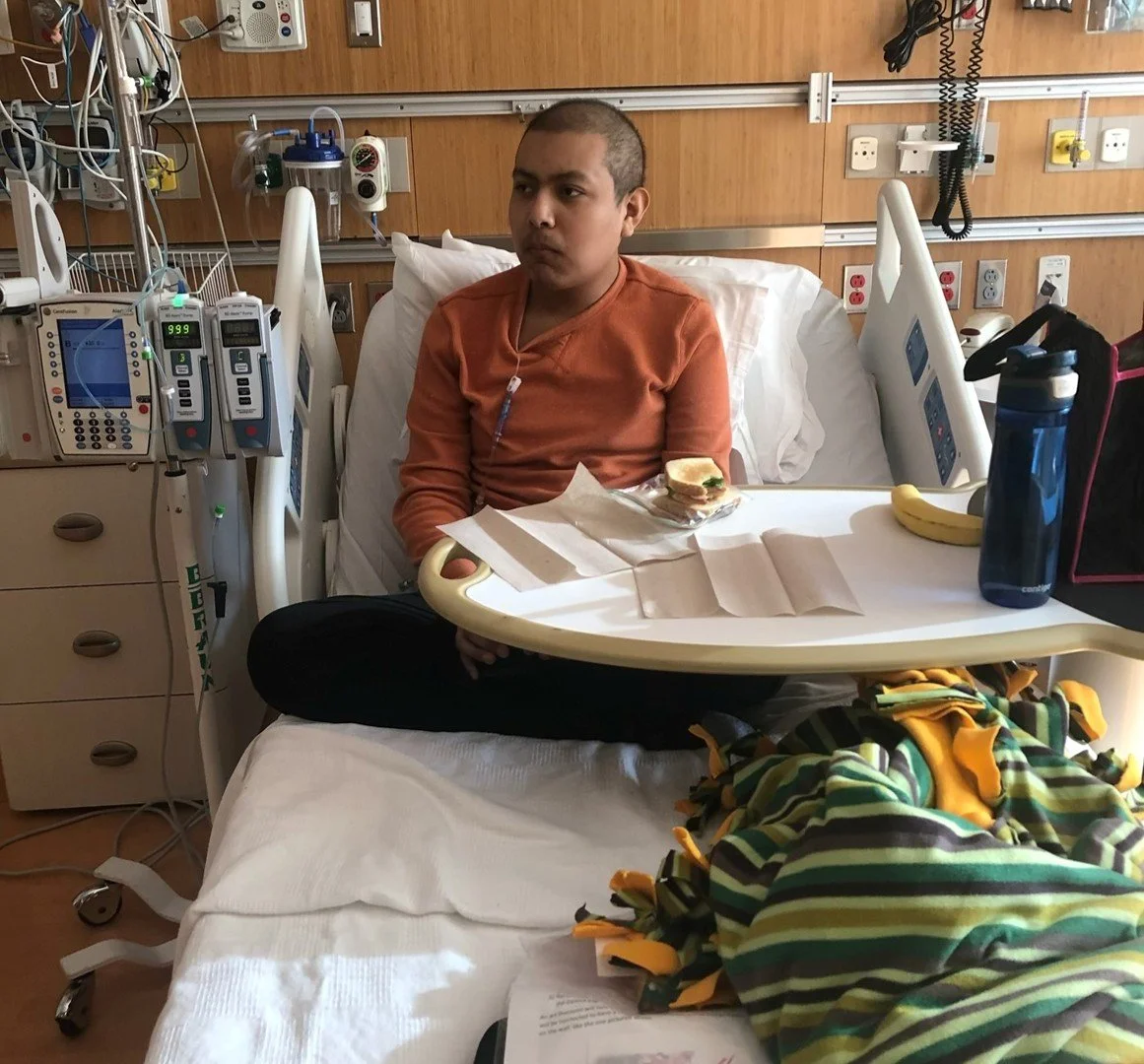
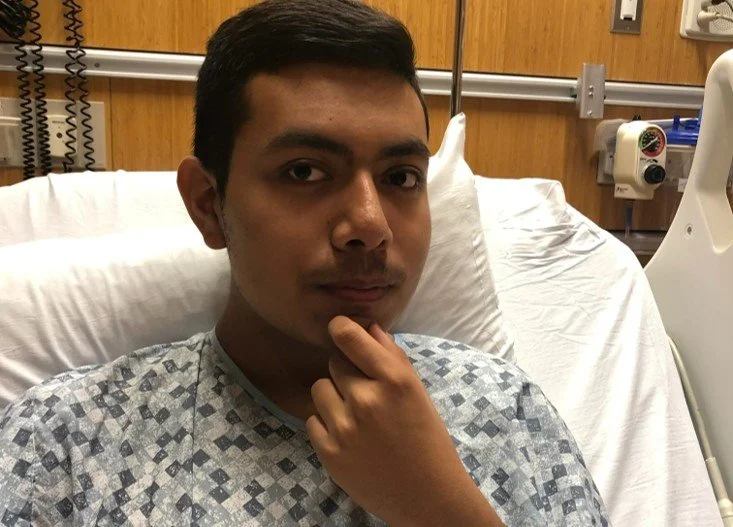
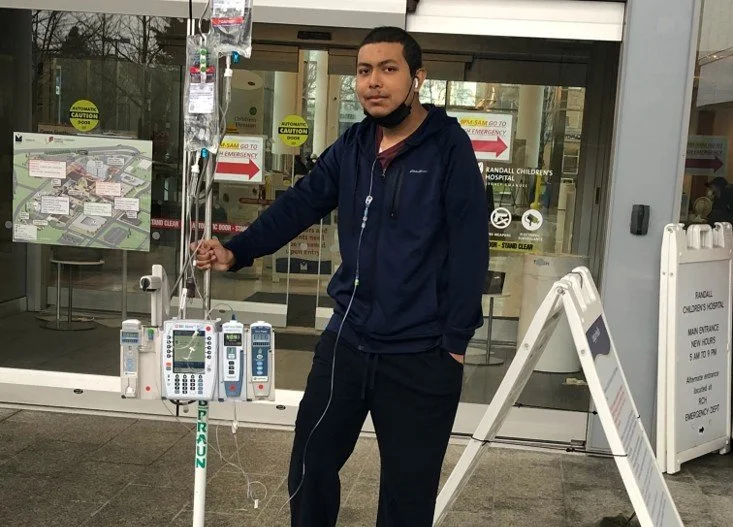
But despite the blur of information and rooms in the hospital, some details felt like perfect focus for him:
“I remember the green wristband on my left arm. I remember the morning sun shining through the window. I remember the nurses coming in and out of my room. I remember the translator diligently conveying the doctor’s words into Spanish for my parents. And I’ll never forget Dr. Richards, standing in a pretty floral dress with yellow flowers while she told me the news.”
Grappling with the Diagnosis
He didn’t know what to feel through all of it, but even if he wasn’t aware of all the details, he did know the word cancer.
“I might not have known the word Leukemia, but I knew the word cancer,” he said. “I didn’t say it out loud, not to my parents or the doctor, but I thought, ‘I guess this is how it ends.’ All I knew about cancer was that people died from it. I didn’t think there was a possibility of living.”
It’s a heavy thing to grapple with silently, especially for a teenage boy thrust into the pediatric cancer world. But it was important to Alan that he not worry his parents — he didn’t tell them what he was thinking, didn’t cry, didn’t scream, didn’t freak out.
“I just immediately assumed my life was done,” he said.
It was a difficult night for him and his family, understandably. But Alan didn’t have to wait silently in his thoughts for long: an hour later, he officially started chemo and his headaches decreased immediately.
By the time he was going home, he’d had time to process. He’d learned that his prognosis was good. “That helped a lot,” he said. “But now I had concerns about how I was going to finish high school.”
Suddenly, Alan’s days went from worrying about an essay for English class or a math test to getting blasted with chemo, or a bone marrow biopsy, or Dr. Richards asking if he’d like to hold her hand as he was rolled into surgery (he did hold her hand, he added).
Seeking Relief from the Stress and Isolation
At one of his appointments over the next few months, his mom asked Alan if he’d be interested in signing up for JoyRx Mentorship.
“NO, I wasn’t interested,” he said incredulously. “I thought, I don’t need some random guy pitying me. Sure, I was feeling alone in the hospital since my friends couldn’t visit, and the appointments could be stressful and isolating… but I’d feel even more awkward if some dude was there.”
Additionally, although Alan was technically a pediatric patient, he was entering his senior year of high school. He was nearly eighteen years old. He thought that, hey, he’s almost an adult, and he needs to grow up. “Some dude” stopping by to be “forced” to be his friend just felt like the worst idea ever to him.
“But my mom encouraged me and…” he sighed. “How can I say no to my mother?”
A New Friendship Begins
So that’s how Alan ended up meeting Tom, his JoyRx Mentor.
“And, yeah, I did feel awkward at first,” he admitted. “When Tom came to my appointments, he was trying to figure out what I liked. Mentors have their big toy bags, but I’m not a little kid. So what do you bring a teenager like me? What do you do to spend the time when the eighteen-year-old isn’t interested in Play-Doh or Build-A-Bear?”
What indeed. Luckily, Tom was adaptable — he started bringing games and puzzles to their meetings. And, eventually, he introduced the game of cribbage to Alan.
“And turns out, I really like playing cribbage!” Alan said. “At first, I didn’t understand the rules. I thought Tom was just making random things up because it all sounded too weird. I’d try to teach the game to my friends when I was out of the hospital, and they’d look at me like I was crazy.”
So, cribbage became his and Tom’s thing. And for Alan, that was the best part.
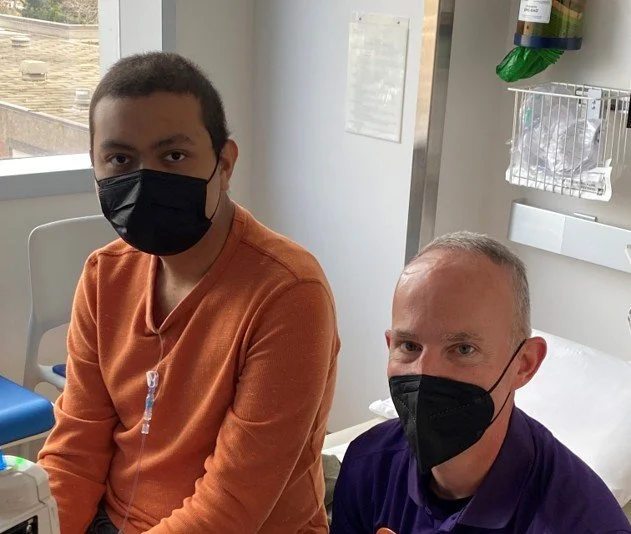
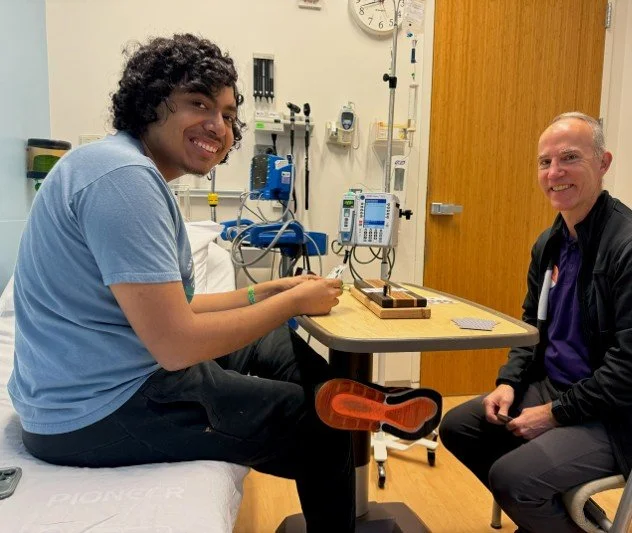
“It was ordinary,” he said with a smile. “Looking at it, just sitting together playing a game and chatting about our days could seem almost boring. But in the strangeness and stress of treatment, I craved these simple interactions. It was those mundane moments that made all the difference for me.”
Most importantly, these moments made Alan feel “normal.”
“Because of Tom, I felt like myself,” Alan said.
Alan came to deeply appreciate Tom. He was an adult, but not one of his parents. He was a friend, but not a teenager. He was there for Alan, and he wanted to talk with him. Very quickly, Alan stopped worrying about whether Tom was there out of a sense of obligation or pity. He knew that Tom wanted to be there and valued the friendship with Alan just as much as Alan did with him.
“I knew we were friends,” said Alan. “That’s what mattered.”
Joy in the Mundane
Whenever Alan spoke with Tom, it felt like another outlet for him to release and process his emotions. Tom was encouraging and supportive of Alan’s journey, being a cancer survivor himself.
“We’d walk similar paths, and his insights, suggestions, and encouragements meant so much to me,” Alan said. “I admired him. I felt his unconditional support. I knew that if I had to cry, he’d be there for me. No matter what.”
And after months of treatment, Alan moved into the maintenance phase. He was in college and doing well in his classes. He had a trusted professor who was very encouraging of his learning and helped him combat his imposter syndrome. Things were looking up and he started counting down the days on a whiteboard until his last round of chemo.
100 days. Then 99 days. Then 98…
On December 22, 2024, Alan took his last set of pills.
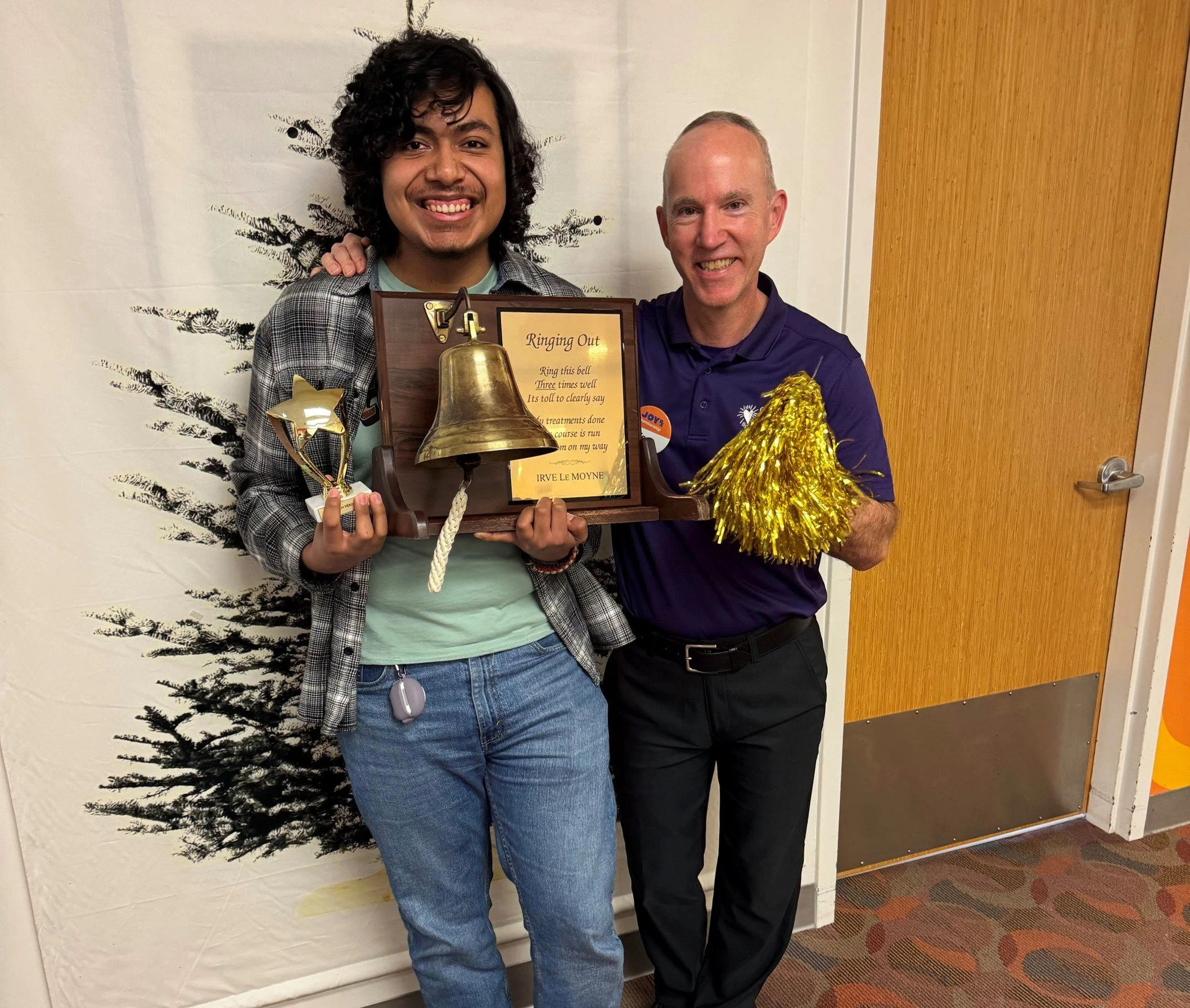
“And just like that, I finished cancer treatment,” Alan said. He rang the bell and had the ceremony with the hospital staff and Tom by his side. For Alan, though, it didn’t really start to sink in until he was in the car heading home with his parents.
“That’s when it sank in,” he said. “I was leaving the hospital. And this time, it was for good.”
Today, Alan continues his studies at Portland State University, where he’s studying biochemistry. And, he says, he’s so grateful to just be an ordinary college student — making friends, TA-ing for his favorite professor, hiking, playing video games, and sipping boba with friends.
He’s looking forward to what the school year will bring and what the future holds for him.
“But most of all, I’m looking forward to the mundane,” he said. “Average. Normal. Mundane. Maybe these are things that some young people my age might scoff at. But for me, it’s a gift to wake up in the morning and simply feel normal. Because during my time in treatment, that was so hard.”
That, Alan says, is what Tom gives to him: a chance to feel normal. Playing cribbage. Talking about his problems. Thinking about the future.
“I’ve found that joy is important regardless of how long it lasts,” he said. “Even one small moment of joy can make an entire day different. Even one mundane, average, normal moment can spark a whole lot of joy.”
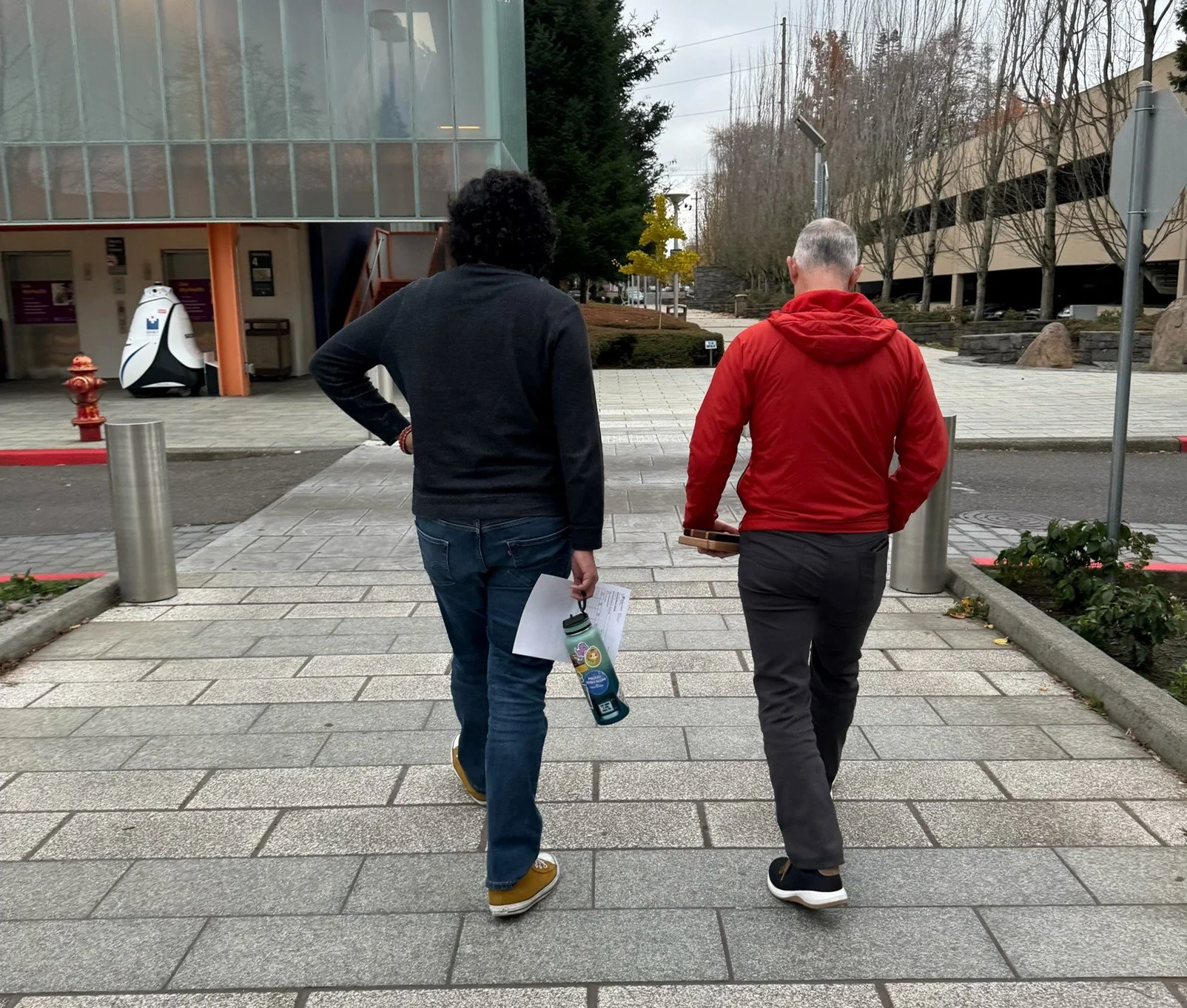
So in the end, Alan can admit his mom was right: He needed to say yes to JoyRx and needed to meet Tom. He’s forever grateful for that ordinary friendship and how, in the end, it represents something truly extraordinary.
Alan and his family were recently honored guests at Live From the Heart, our annual gala. Alan was one of our featured speakers and shared his story.